6 December, 2025
0 Comments
1 category
The journey of the London Underground is filled with pivotal moments, architectural breakthroughs, and cultural shifts. From the Victorian era to the present, here are some of the most important dates and events in the Tube’s history.
Birth of the Underground:
- 10 January 1863: The world’s first underground railway in the world opens (the Metropolitan Railway), marking the official birth of the London Underground.
- 1890: The first deep-level electric railway begins service, transforming the possibilities of subterranean transit.
Early Twentieth Century Innovations:
- 1908 was a landmark year. It saw the formal adoption of the name “Underground” on station signage, and also the introduction of the first electric ticket-issuing machines.
- In 1911, Tube passengers first saw escalators in use at Earl’s Court Station, making station navigation a little less of a calf workout.
Progress & Change:
- By 1929, manually operated train doors were phased out in favour of mechanical ones, making trains safer and reducing staff risk.
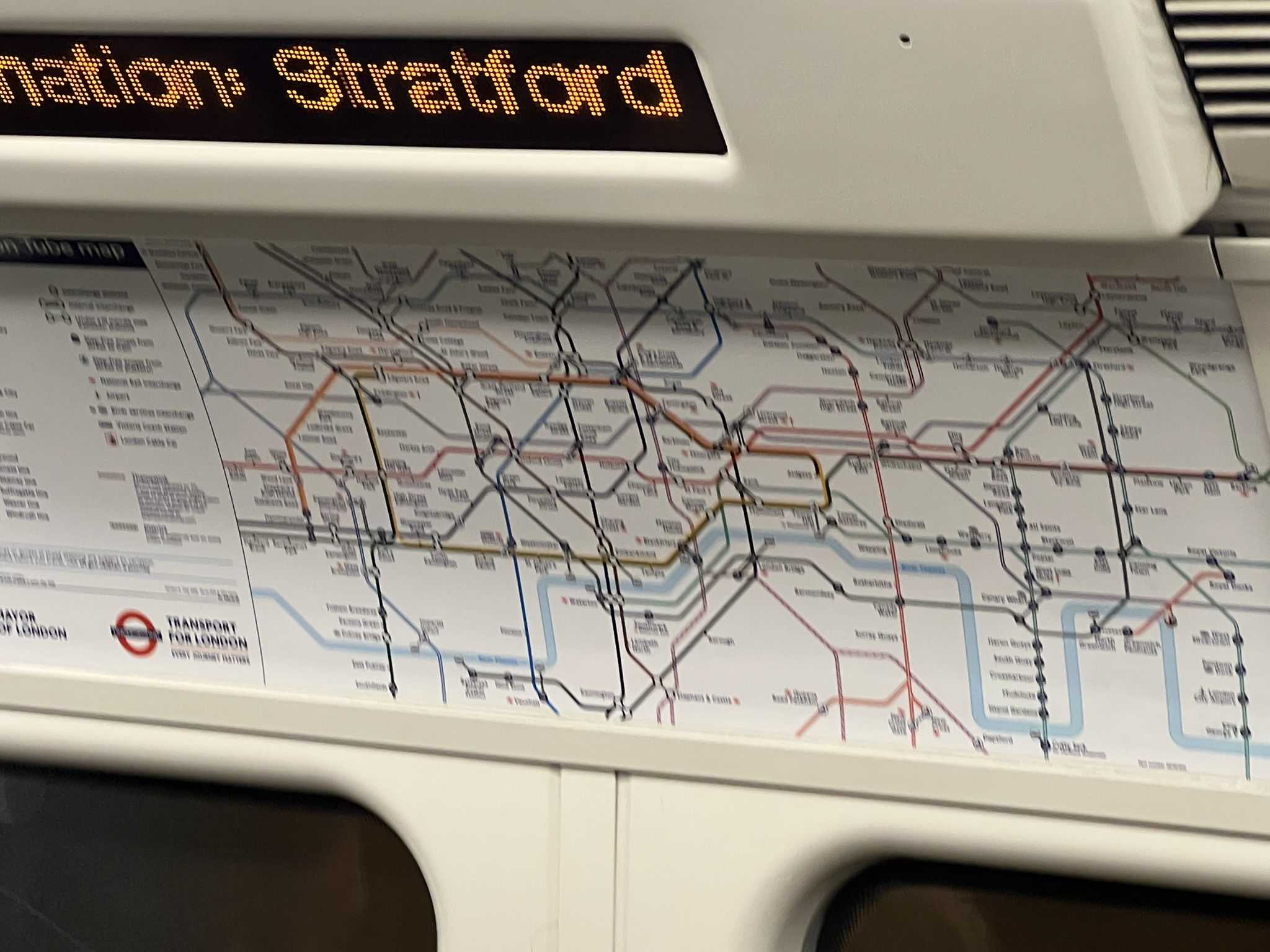
- The iconic, diagrammatic London Tube Map, designed by Harry Beck, began to emerge in its recognisable form in the 1930s, and has since become a global design classic.
End of the Steam Era:
- Steam locomotives served passengers on parts of the Underground until 1961.
- The very last steam shunting and freight locomotive was withdrawn in 1971, signalling the complete move to electric traction.
Modern Developments:
- 1994: Penalty fares were introduced on the Underground, a major shift in how fare enforcement was handled.
- Over the decades, many stations have been added, renovated, or repurposed, reflecting changing transport needs, war-time emergencies, and new architectural trends.
Escalators:
- The 1987 King’s Cross fire, which killed 31 people, was caused by a lit match igniting the wooden escalator’s structure. This incident led to phasing out wooden escalators.
- The last wooden escalator was at Greenford station and was replaced in March 2014.
Engineering Turning Points:
- Lifts, escalators, and sub-surface infrastructure gradually expanded, allowing for deeper, more complex station designs and better passenger movement.
- In 1999 the Jubilee line saw an extension to Stratford. The later stations are larger and have special safety features, both aspects being attempts to future-proof the line.
The history of the London Underground is a story of innovation and adaptation, from steam to electric, from manual tickets to automation, and from surface routes to the deepest leaps underground. Every era has left its mark on the network, shaping the way Londoners move today.
Category: Facts
Related Posts
Ghost Stations and Abandoned Platforms
The London Underground isn’t just a network of busy, crowded…

Further facts of the London Underground
The London Underground is the oldest underground train network in…
