25 November, 2025
0 Comments
1 category
The London Underground is as much a triumph of civil engineering as it is a transport system. Beneath the streets of London lies an astonishing network of tunnels, lifts, escalators, and architectural quirks that few commuters ever notice.
Network Size & Scale:
- The total network spans approximately 402 km (249 miles) of track.
- Yet, only about 45% of that network is actually underground; large portions run on surface rails.
- One of the longest continuous tunnels in the system is on the Northern line, stretching nearly 27.8 km (17.25 miles) from East Finchley to Morden.
Speed, Traffic, and Movement:
- The average speed of a Tube train is about 33 km/h (20.5 mph): not exactly high-speed rail, but efficient in the dense, winding urban environment.
- Each Tube train travels roughly 184,269 km (114,500 miles) per year, almost five times around the world.
Lifts & Escalators:
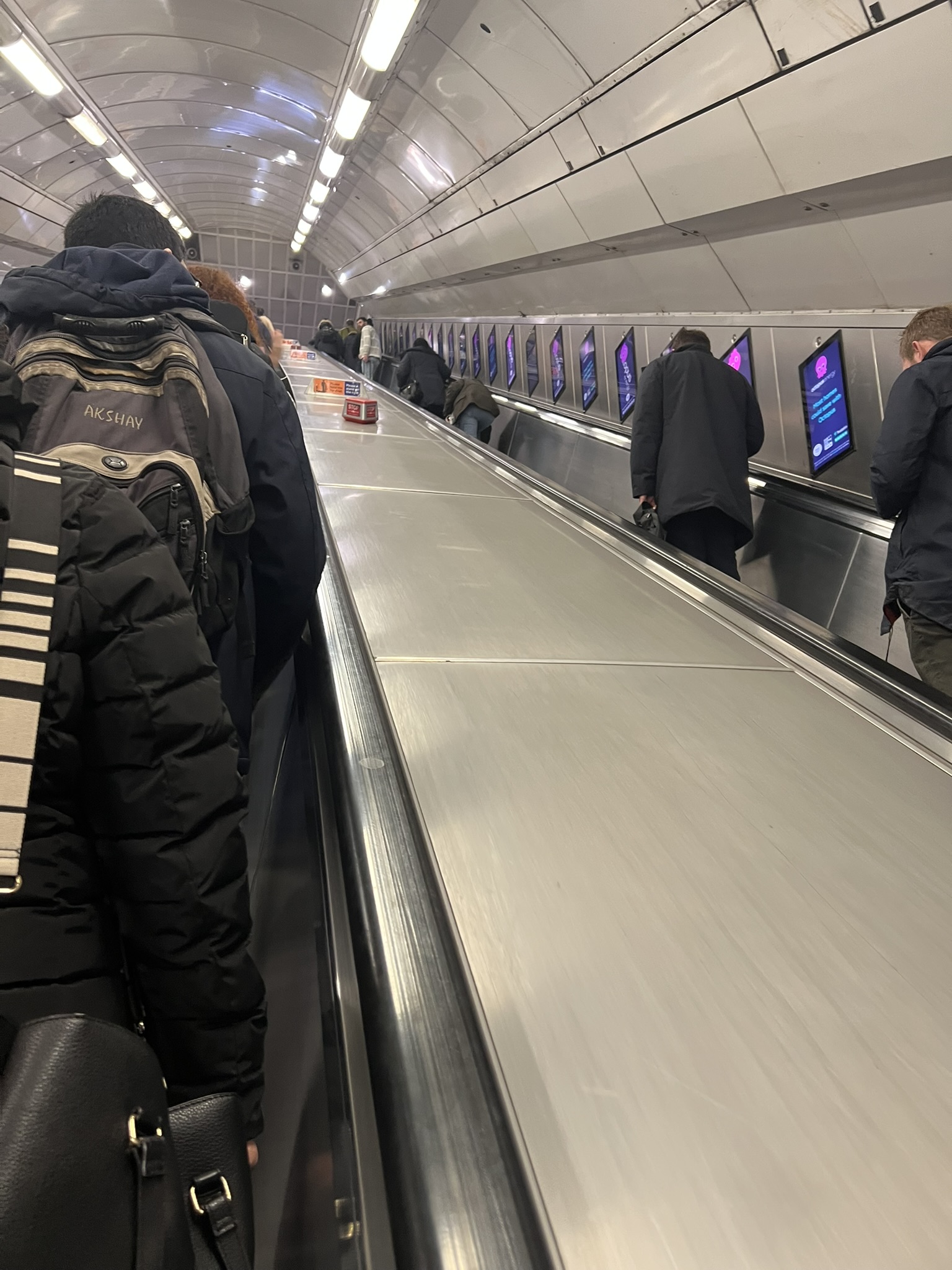
- The system has 426 escalators, and Waterloo alone has 23 of them, the most of any station.
- Hampstead station has the deepest lift shaft at approximately 55.2 m (181 ft) below ground.
- The deepest station platforms are at Hampstead, with platforms about 58.5 m (192 ft) underground.
Architectural Highlights:
- Gants Hill Station, in Ilford, on the Central line was designed by Charles Holden in the 1930s, features a striking barrel-vaulted concourse beneath a roundabout, directly inspired by the Moscow Metro’s design.
- This station is one of the few on the Underground with no surface building, the ticket hall and platforms sit entirely underground.
- Tiles, clocks, and miniature roundels (the Tube logo) decorate the platforms at Gants Hill, giving it a distinctive, elegant feel.
Engineering Challenges:
- Building deep-level tunnels required sophisticated techniques, especially in the early 20th century. Engineers used tunnelling shields (metal cylinders) to protect workers as they excavated by hand.
- Ventilation, electricity, and structural support are constant concerns in the Underground. For instance, many disused stations’ tunnels have been repurposed over the years, but maintain structural integrity only due to careful maintenance.
The London Underground is not just a commuter service, it’s a subterranean marvel , full of engineering achievements, architectural beauty, and hidden complexity. Every station and tunnel tells a story of innovation, risk, and historical layering.
Category: Facts
Related Posts

Geography of the Tube: Heights, Depths & Tunnels
The Tube’s geography is far more complex than it appears…

Escalators: stand on the right, walk on the left on
On the London Underground, you stand on the right and…